All-on-Four vs. All-on-Six Dental Implants: What's the Difference?
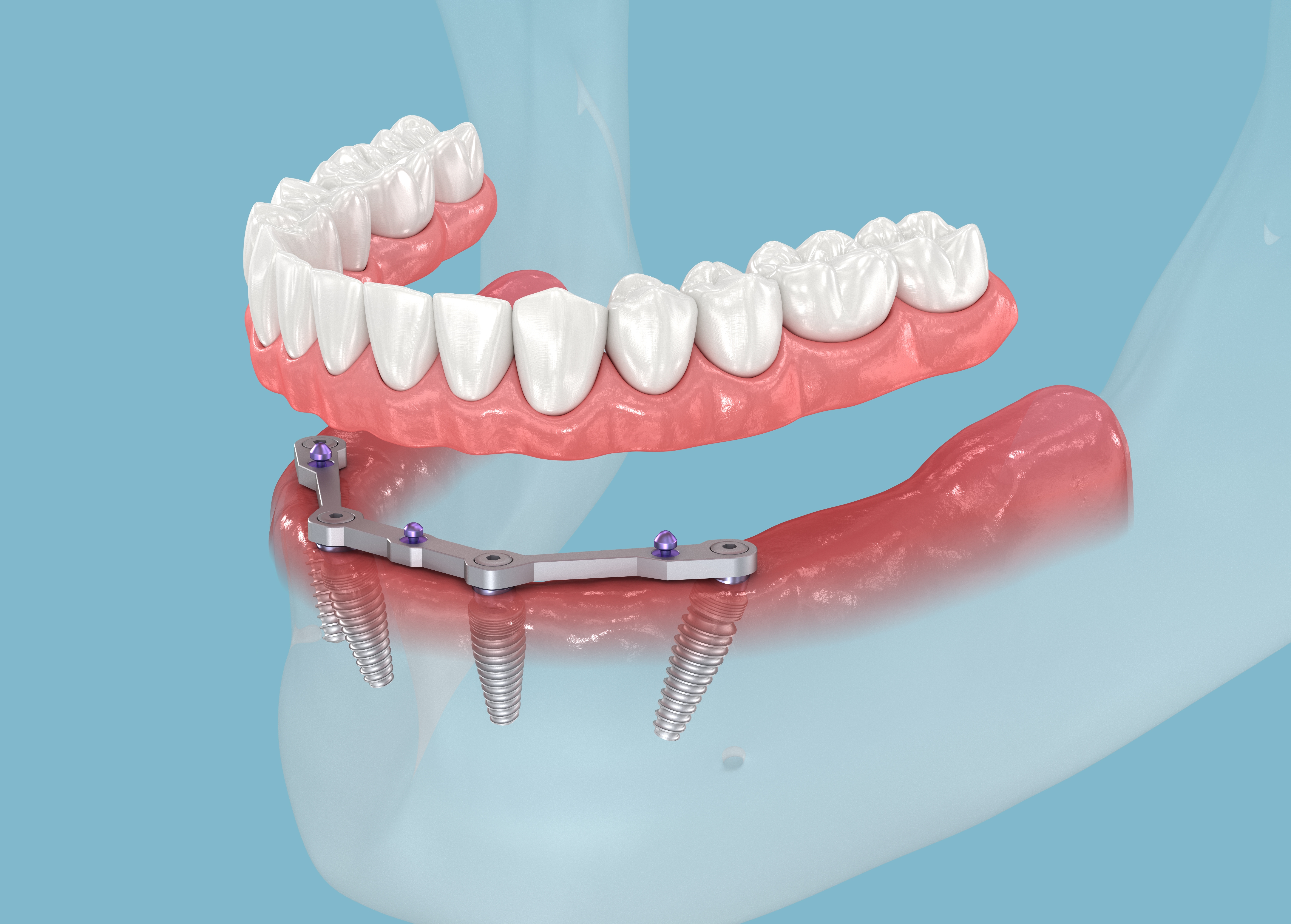
If you are missing most or all of your teeth, full-arch dental implants can provide a secure, long-term alternative to traditional dentures. Two common approaches are All-on-Four and All-on-Six dental implants. Both support a complete set of replacement teeth, but they differ in the number of implants used, jawbone requirements, and treatment planning. Understanding these differences can help you make an informed decision about restoring your smile.
All-on-Four dental implants use four strategically positioned implants to support a full arch of replacement teeth. Typically, two implants are placed towards the front of the jaw, while the back implants are angled to maximise support from the available bone.
This approach may benefit patients who have experienced some jawbone loss, as the angled placement can sometimes reduce the need for bone grafting. All-on-Four offers a fixed alternative to traditional dentures using implant retained dentures, helping patients regain confidence when eating, speaking, and smiling.
All-on-Six dental implants use six implants instead of four to support a complete arch of replacement teeth. The additional implants provide more support points across the jaw, potentially distributing biting forces more evenly. This approach may be suitable for patients with sufficient jawbone volume who could benefit from additional implant support.
However, having more implants does not automatically mean better results. The most appropriate approach depends on individual dental needs.
Although both treatments serve a similar purpose, several factors distinguish them:
• Number of implants: All-on-Four uses four implants per arch, while All-on-Six uses six.
• Jawbone requirements: All-on-Four may accommodate certain patients with reduced bone volume, while All-on-Six generally requires sufficient bone to support additional implants.
• Support and stability: Both provide fixed replacement teeth, although six implants may offer additional support and help distribute biting forces.
• Treatment complexity: All-on-Six involves placing two additional implants, which may increase surgical time and treatment complexity.
• Cost: All-on-Six typically costs more due to the additional implants and surgical work, although pricing depends on individual treatment requirements.
Choosing between All-on-Four and All-on-Six dental implants depends on more than the number of missing teeth. At Priors Hall Dental, we understand that each patient's dental health and treatment goals are different. A thorough assessment helps determine whether full-arch dental implants are appropriate and which approach may provide suitable support.
Important considerations include jawbone density, gum health, remaining teeth, bite alignment, and overall health. Dental imaging may also be needed to evaluate available bone and plan implant placement. In some cases, additional procedures such as bone grafting may be recommended before implant treatment.
Both All-on-Four and All-on-Six dental implants are designed to provide long-term tooth replacement. However, their longevity depends on oral hygiene, general health, implant placement, and regular dental maintenance.
Daily cleaning around the implants and beneath the bridge/denture is essential to reduce the risk of inflammation and infection. Routine dental appointments also help monitor the implants and surrounding tissues.
If you are considering dental implants, schedule a consultation at Priors Hall Dental to learn more about All-on-Four and All-on-Six. Our Implantologist can assess your dental needs, explain your treatment options, and help you determine which approach is right for your smile. We are conveniently located for patients in Corby, Kettering, Rushton and Barton Seagrave. Call us today on 01536 214144 to book your appointment.

We offer a wide variety of dental services to the Hampstead Road community. Contact us with any questions about our services.

For non-urgent questions or to learn more about our services, contact us today!



© 2026 Priors Hall Dental. All Rights Reserved - Accessibility Statement - Privacy Policy (Updated 11/11/2025) - Sitemap
Powered by